The Short Answer
Both are hands-on therapies. Both aim to reduce pain and support wellbeing. They are not interchangeable. CST works on the craniosacral system — the membranes and cerebrospinal fluid surrounding the brain and spinal cord — using no more than 5 grams of pressure. Massage targets muscles and soft tissue with substantially more force. The training paths differ, the licensure requirements differ, and the clinical applications differ.
Side-by-Side Comparison
| CranioSacral Therapy | Massage Therapy | |
|---|---|---|
| Target System | Craniosacral system (membranes and cerebrospinal fluid surrounding the brain and spinal cord) | Muscles, soft tissue, fascia |
| Pressure Used | No more than 5 grams — roughly the weight of a nickel | Typically 30 to 50 lbs depending on technique; deep tissue can exceed this |
| Client Clothing | Fully clothed throughout the session | Typically unclothed under draping |
| Primary Goal | Release restrictions in the craniosacral system to improve CNS function and whole-body health | Reduce muscle tension, improve circulation, support relaxation |
| Practitioner Requirements | Must hold a healthcare license permitting hands-on therapy on clients; must complete UII training curriculum | Licensure requirements vary by state; no medical background required in most states |
| Who Developed It | Dr. John E. Upledger, D.O., Michigan State University (1975–1983) | Developed across multiple traditions over centuries; no single founder |
| Typical Session Length | 45 to 60 minutes | 30 to 90 minutes |
How CranioSacral Therapy Works
CST practitioners are trained to palpate the craniosacral rhythm — a subtle, tide-like motion produced by the circulation of cerebrospinal fluid. This rhythm is detectable through the skull, sacrum, and other structures connected to the craniosacral system. Restrictions that interfere with this rhythm can arise from injury, stress, emotional trauma, or other physical forces.
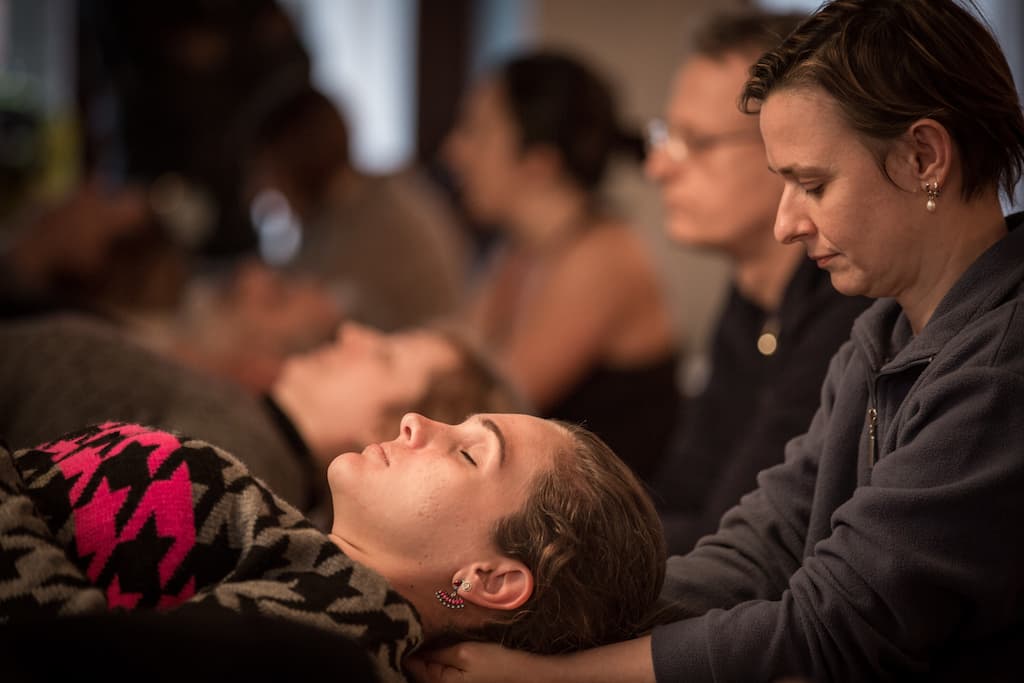
A session involves extremely light holds at specific points. The practitioner listens through their hands, identifies where restrictions exist, and uses the body's own mechanisms to facilitate release. Because the craniosacral system directly influences the central nervous system, changes in this system can affect digestion, immunity, musculoskeletal function, and emotional health.
CST was developed through formal university research — not anecdote — and Upledger Institute International continues to support and publish research in the field. Read more on the Discover CST page.
How Massage Therapy Works
Massage applies manual pressure to muscles, connective tissue, and fascia to reduce tension, improve blood flow, and support relaxation. Techniques range from long, gliding strokes (Swedish massage) to focused, deep pressure on specific muscle groups (deep tissue). Most massage techniques involve moderate to firm pressure, and clients are typically undraped during treatment.
Massage therapy excels at releasing acute muscle tension, reducing delayed-onset soreness, improving local circulation, and activating the parasympathetic nervous system to reduce stress hormones. For musculoskeletal complaints rooted in tight muscles or restricted fascia, massage is often the appropriate choice.
Many licensed therapists train in both massage and CST. In those sessions, the practitioner may move between approaches based on what the body presents. The two modalities are not competing — they address different layers of the same person.
Frequently Asked Questions
Yes, when your practitioner is trained in both. Many licensed therapists hold credentials in both massage and CST and integrate elements of each within a single session. The session would typically need to be longer to accommodate both approaches fully. Ask your practitioner how they structure combination sessions and whether that approach fits your goals.
No. The 5-gram touch is extremely gentle — far lighter than even a relaxation massage. Most people find sessions deeply comfortable. Occasionally a person notices a brief, mild sensation as a restriction releases, but this passes quickly and is not comparable to the soreness some people experience after deep tissue massage. CST is well-suited for people who find pressure-based therapies too intense.
They address different contributors to headache pain. Massage can reduce tension headaches by releasing tight neck and shoulder muscles. CST addresses restrictions in the craniosacral system that may contribute to migraines and recurring headaches at a structural level — including restrictions around the temporal bones, sphenoid, and cranial sutures. For tension headaches with a clear muscular component, massage may provide faster relief. For migraines and chronic headaches that don't respond to muscle work, CST is worth exploring. Many people find value in both.
Yes. CST is not taught in massage school. Massage therapists who want to add CST to their practice must complete Upledger Institute International's training curriculum, beginning with CranioSacral Therapy 1 (CS1). They also need to hold the licensure their state requires to perform manual therapy. In states where a massage license is sufficient, they are eligible to pursue UII courses and certification. See the full certification path.
The craniosacral rhythm is a subtle, rhythmic motion produced by the circulation of cerebrospinal fluid around the brain and spinal cord. It has nothing to do with muscle tension. Trained CST practitioners can feel this rhythm through light palpation at the skull, sacrum, and other connected structures. When restrictions impede this rhythm — from injury, stress, or other causes — they can affect the entire central nervous system. Massage therapists feel and release tight tissue; CST practitioners detect and release restrictions in this fluid-membrane system. The two skills are distinct and target different physical phenomena.
Coverage varies widely and depends on your plan and provider. Some insurance plans cover massage under qualifying conditions such as a physician referral for a diagnosed condition. CST may be covered when performed by a licensed healthcare professional under a qualifying diagnosis. Check directly with your insurance carrier and ask your practitioner how they typically bill. UII certification helps practitioners demonstrate their qualifications, which can support reimbursement claims.
Yes, if they hold the licensure required in their state to perform hands-on therapy on clients. In most states, a massage therapy license qualifies. They must then complete UII's course sequence (CS1 and beyond) and, if pursuing certification, pass the required exams and document clinical sessions. In states that do not require a hands-on license, additional documented training in anatomy, physiology, pathology, and ethics is required.
CST was specifically studied for the somatic (physical) components of PTSD, depression, and anxiety. Dr. Upledger and Zvi Karni's research identified how the body retains emotional energy from trauma, forming what they termed an "energy cyst," and developed SomatoEmotional Release (SER) as an extension of CST to help the body release it. Massage therapy reduces cortisol and activates the parasympathetic nervous system, supporting relaxation. Both have value for trauma recovery. CST's extremely light touch is often more appropriate for trauma survivors who find firm pressure overwhelming or triggering.
A licensed massage therapist can begin UII's curriculum immediately. Competency in CST builds through the course series: CS1, CS2, SER1, SER2, and ADV1. Each is a multi-day hands-on intensive offered at locations worldwide. Formal certification — earning the CST-T or CST-D designation — requires documented sessions, written and practical exams, and (for the Diplomate level) case histories and a Preceptorship. Most practitioners take one to three years from CS1 through certification, depending on course availability and how quickly they complete session documentation. See the full path: How to Get Certified in CranioSacral Therapy.
Both affect the nervous system, but through different mechanisms. Massage reduces sympathetic nervous system activity (the stress response) primarily through relaxation of tissue and the experience of safe, caring touch. CST directly addresses the physical environment of the central nervous system by working on the membranes and fluid that surround the brain and spinal cord. CST's effects on the CNS can be more direct and far-reaching than massage, particularly for chronic neurological conditions, trauma responses, and central sensitization.
Become Certified
Ready to learn about becoming a certified CST practitioner?
Contact Us
Have questions?